




China's shipbuilding industry is heading towards a broader 'blue ocean'
Zhonggong Network 2025-01-21 08:17
From a small flat boat to a towering giant ship, China's shipbuilding industry is heading towards the forefront of the times at full speed. In 2024, China's shipbuilding industry will deliver a "fully excellent" performance report. According to the latest data from the Ministry of Industry and Information Technology, the three major indicators of China's shipbuilding industry - shipbuilding completion, new orders received, and orders held - have remained the world's top for 15 consecutive years. More than half of the ships delivered globally are branded as "Made in China"; More than 60% of the newly generated shipbuilding orders worldwide flow to China; In the future, more than 70% of the waiting ships will be shipped from Chinese shipyards. China's shipbuilding industry leads the world, thanks to the strong foundation and innovative technology of China's shipbuilding industry, as well as the cooperation and support of high-quality global suppliers. This is a reflection of the continuous improvement of the country's industrial technology level and economic strength.
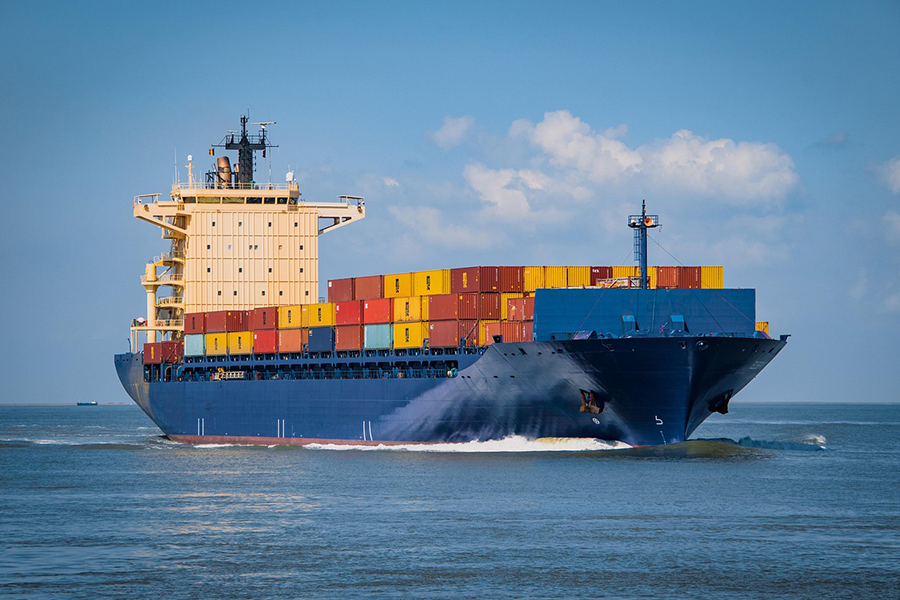
The shipbuilding industry is known as the "manufacturing industry facing the ocean" and the "crown of modern industries", and it is an important support for a maritime power. A good development trend cannot be separated from the strong traction of policies and systems. In recent years, China has revised and improved a number of ship technical regulations, providing clear specifications for standardized shipbuilding in terms of unified technical standards, standardized inspection systems, and the bottom lines of ship safety and environmental protection. In October 2024, the Maritime Safety Administration of the Ministry of Transport issued the "Technical Specification System for Ships and Offshore Installations (2024)", emphasizing the promotion of the digital transformation of the ship industry, the promotion of technological innovation and application such as autonomous navigation and remote control of intelligent ships, and supporting the development of intelligent shipping.
At the beginning of 2024, the first domestically-made large cruise ship embarked on its commercial maiden voyage in Shanghai. In less than a year, the second domestically-made large cruise ship achieved the through connection of the entire ship. With an increase in tonnage and length, it realized a historic leap of domestically-made large cruise ships from scratch. Judging from the development experience, to ensure the steady and long-term development of China's shipbuilding industry, it is necessary to continuously cultivate new business forms, create new driving forces, and forge new advantages. We should adhere to the development directions of high-end, intelligent, standardized, and green development, and take science and technology as the guide to accelerate the cultivation of "blue momentum".
Currently, the global shipbuilding industry is in a new recovery cycle. Sticking to the "comfort zone", following the old path, and building the same old ships is tantamount to waiting for death. It is necessary to take the initiative to seize the opportunity and rely on independent innovation to transform towards the medium and high-end market. This means that we need to drive the upgrading of the entire industrial chain through independent research and development of new technologies, new materials, and new processes, and propel China's shipbuilding industry towards a "blue ocean" with broader prospects. Facing the new situation, China's shipbuilding industry needs to further improve its research and development system. Especially in areas such as shipbuilding industrial software, marine engines, and the design and manufacturing of large cruise ships, there is an urgent need to implement independent and targeted special projects, plan the construction of industrial clusters, and concentrate superior resources to carry out key research and breakthroughs. The challenge of domesticating core components also urgently needs to be overcome. It is necessary to establish an efficient, stable, and reliable supply chain system, strengthen the connection between supply and demand, and enhance the commercial application level of domestic components.
The influx of new ship orders is indeed something to be delighted about, but it also brings unprecedented delivery pressure. In order to improve manufacturing efficiency, many new domestic shipbuilding enterprises have initiated the construction of demonstration applications of industrial Internet in areas such as equipment asset management, energy management, and logistics management. They are actively promoting a wider range of "machines replacing humans, engineers replacing workers, and intelligent manufacturing replacing traditional machinery". Intelligent manufacturing facilities such as intelligent manufacturing centers and intelligent processing workshops have been successively established, driving the continuous leap of productivity to new levels. Digital transformation, networked collaboration, and intelligent transformation are the inevitable paths for China's shipbuilding industry to move towards high-quality development. It is necessary to apply Internet of Things (IoT) technology more extensively to achieve real-time interconnection and intelligent management of production factors such as venues, equipment, and personnel. Moreover, more attention should be paid to extracting valuable information and knowledge from ship big data, so as to provide decision-making support and operation optimization solutions for the shipping industry.
Promote the standardization of shipbuilding to effectively improve the efficiency of industrial collaboration. Standards are the "soft" infrastructure, which determines the production efficiency and technical level. Inconsistent design and construction standards adopted by different enterprises will lead to huge differences in the structure, performance, materials, and other aspects of ship products. This not only increases the production difficulty and cost but also may pose safety risks during the operation of ships. In order to ensure the construction efficiency and ship quality, a unified standard that comprehensively covers the entire chain of design, process, manufacturing, supply chain, and after-sales service should be established and promoted. It is necessary to optimize the standard system, refine the standard development, and implement the standards solidly. The modular production mode can be actively promoted. Ships can be decomposed into several independent modules, which can be flexibly combined like building blocks to achieve efficient collaboration among different production lines or factories.
Adhere to the green development of shipbuilding and comprehensively enhance the foundation of low-carbon development. In recent years, the "green content" of China's shipbuilding industry has increased, and the "steel giants" navigating the sea have gradually transformed into "green giants". Today, "green ships" have become a shining business card of Chinese manufacturing. The share of China's newly received orders for green-powered ships in the international market has increased from 31.5% in 2021 to 78.5% in 2024, achieving full coverage of mainstream ship types. In 2024, China's first domestically developed new large-scale LNG (Liquefied Natural Gas) carrier was delivered in Shanghai, marking a magnificent transformation of China's LNG ship technology from following to leading. To continuously promote the green development of the shipbuilding industry, multiple technical approaches need to be implemented simultaneously. It is necessary to accelerate the formation of the supply capacity of a spectrum of green ships, strengthen the research and development of marine new energy equipment, new environmentally friendly marine equipment and materials, improve ship pollutant treatment equipment, and use advanced energy conservation and emission reduction technologies to equip traditional power ships with "green lungs". (Jiang Cuifen)
Source: Guangming Daily